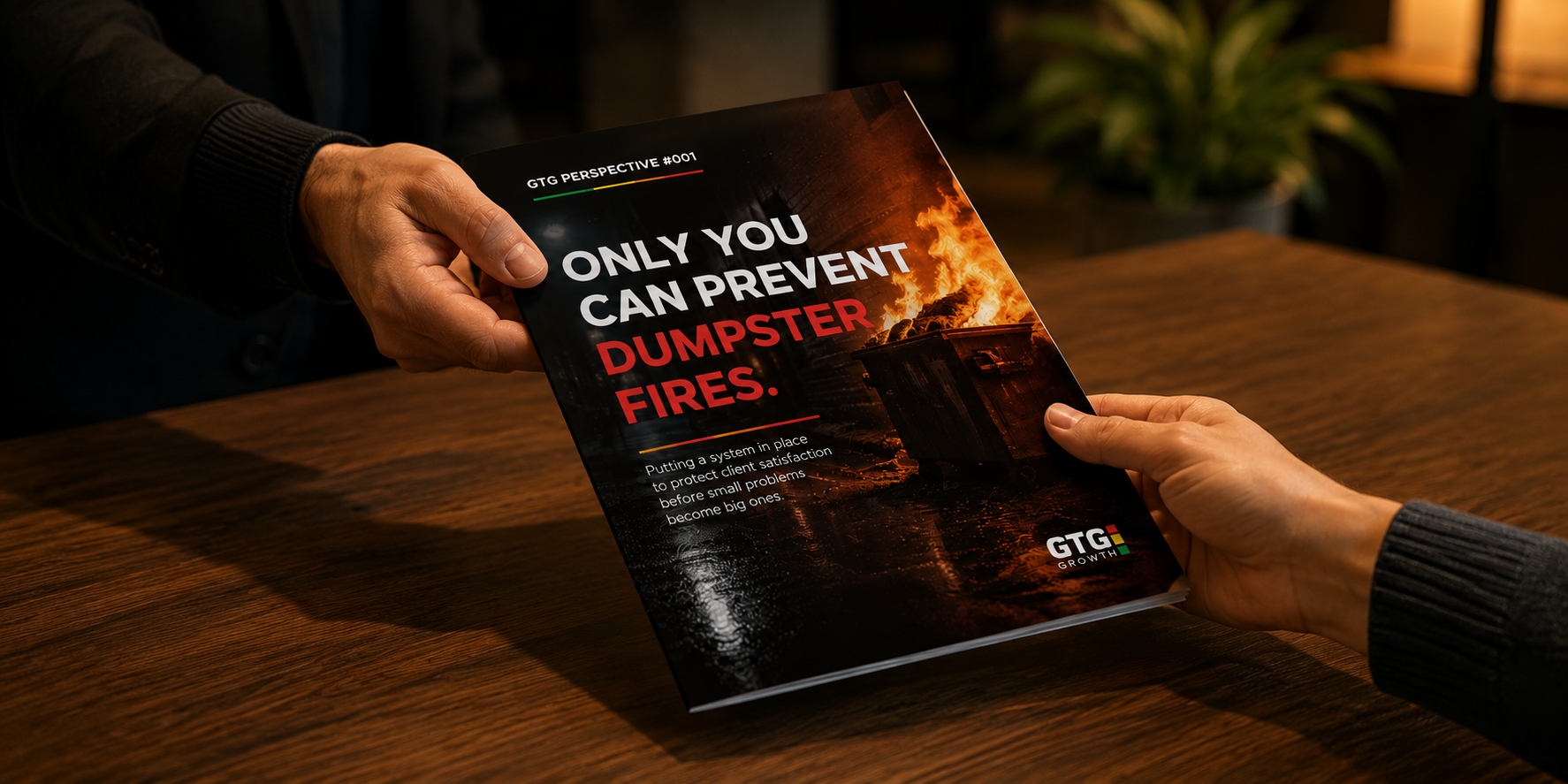
Only you can prevent dumpster fires

Overview
Most organizations don't lose customers because of one catastrophic mistake. They lose them because small issues go unnoticed, expectations slowly drift, communication breaks down, and no one has built the systems to catch problems before they grow.
When a client relationship finally reaches a breaking point, leaders often treat it like an isolated incident. It rarely is.
The truth is, most customer relationship problems aren't people problems. They're systems problems.
Organizations that consistently build strong client relationships don't rely on heroics or good intentions. They create intentional systems that define ownership, identify warning signs early, empower people to act, and continuously learn from what happens along the way.
Preventing dumpster fires isn't luck.
It's a purposeful built system. And it is your responsibility to ensure that it exists.
INSIDE THIS POV
In this Perspective, you'll explore:
Why customer relationships rarely fail because of a single event.
The hidden system failures that create preventable client issues.
A practical five-part framework for preventing dumpster fires before they happen.
The role leadership plays in creating accountability, visibility, and consistency.
A simple worksheet to evaluate your current client relationship management system and identify opportunities for improvement.
start the conversation
Ideas don't change organizations. Conversations do.
Every GTG Growth Perspective is designed to challenge assumptions, create healthy debate, and inspire conversations that lead to greater clarity, stronger alignment, and meaningful action.
The goal isn't to convince you that I'm right. It's to help your team think differently, ask better questions, and uncover the answers that are right for your organization.
Use these questions to start the conversation.
Who owns preventing client "dumpster fires" in our organization?
What signals tell us a relationship is beginning to drift before it becomes a crisis?
Where are we relying on individual heroes instead of intentional systems?
If one of our largest customers became frustrated today, how quickly would we know—and who would respond?
What changes could we make today that would strengthen trust, improve consistency, and create better customer experiences tomorrow?